
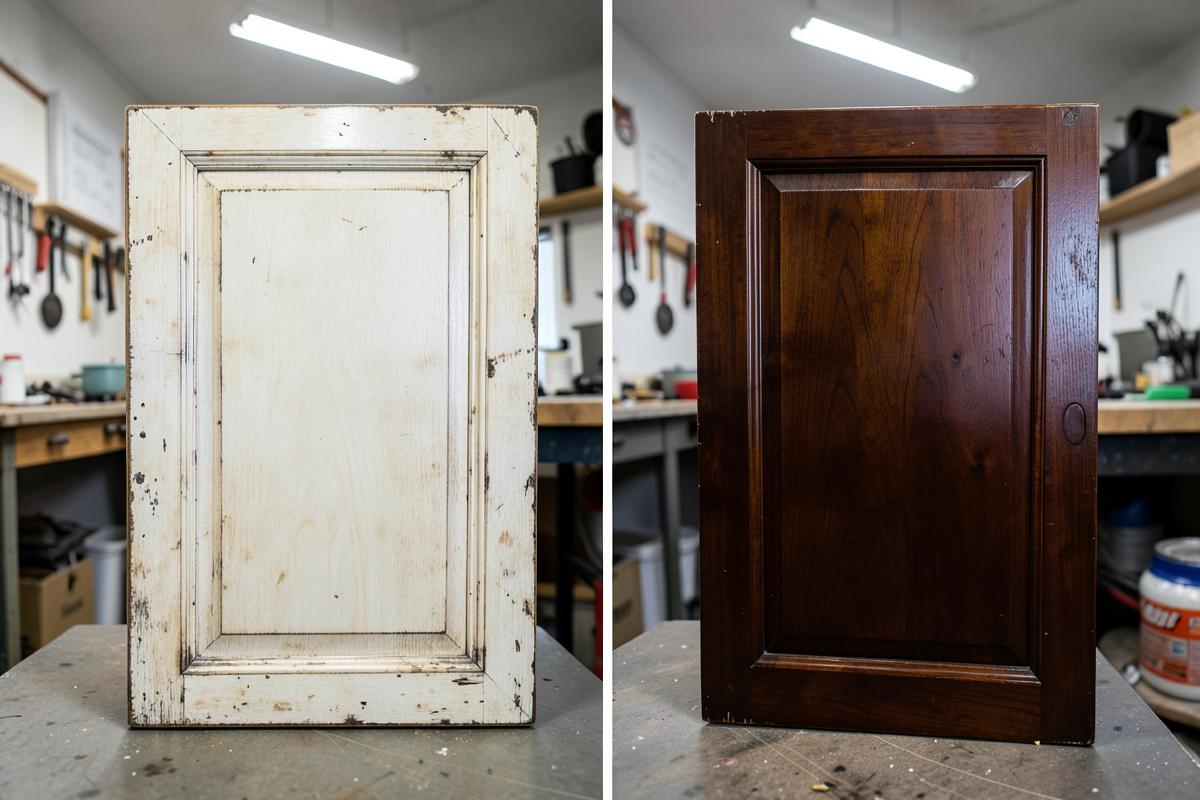
Most kitchens we are asked to replace do not need replacing. The cabinet boxes are solid, the layout works, and what has actually failed is the finish — a thin film that has taken twenty years of steam, grease and hands, and finally given up.
Start with the structure
Open a door and look at the frame joints. If the joinery is tight, the boxes are square and the hinges still pull true, the carcass has years left. Swollen particle board at the sink, delaminating veneer, or racking frames are the real reasons to build new.
Then look at the finish
Cloudiness, yellowing, sticky patches near the cooktop and worn-through edges around handles are all finish failures. Every one of them is repairable. Stripping back to bare wood and rebuilding the finish gives a surface that is harder and more even than the factory original.
What changes and what does not
Refinishing changes colour, sheen and durability. It does not change layout or storage. If your frustration is with where things live rather than how they look, a remodel is the honest answer — and we build custom cabinetry for exactly that.
The practical difference
Refinishing is typically a fraction of replacement cost and a fraction of the disruption. Doors leave, come back, and the kitchen stays usable through most of the work.